
About Vaping
Effects of Vaping
What is Vaping?
Vaping means breathing in vapour that is produced when a liquid, known as e-liquid or vape juice, is heated up. This liquid contains nicotine, flavourings, and other chemicals. Unlike cigarettes that burn tobacco and create smoke, vaping uses heat to form an aerosol. This aerosol contains tiny particles – it is not just harmless water vapour – and these particles can damage the lungs if it is breathed in consistently.
Common Substances in Vapes
- Nicotine, which is addictive and harmful
- Propylene glycol and glycerine, used to create vapour
- Flavouring chemicals
- Harmful substances such as carcinogens and heavy metals like nickel, lead, and cadmium
These chemicals can damage your DNA and increase your risk of getting cancer.
Harmful Drug-Laced Vapes
Some vapes are mixed with illegal drugs such as ketamine, methamphetamine, cocaine, heroin, and synthetic cannabinoids. These are toxic chemicals that cause serious health problems and are against the law in Singapore.
What are K-Pods?
K-Pods are vape pods that contain dangerous drugs such as etomidate, which is a short-acting anaesthetic. When inhaled, K-Pods can cause serious harm, including feelings of euphoria or trance-like states. These substances are very risky and also illegal in Singapore.
Is Vaping Worse than Smoking?
Vaping is addictive and exposes your body to toxic chemicals. Scientists still do not fully know the long-term effects, but current findings show worrying signs. Compared to smoking, vaping can deliver harmful substances at similar or even higher levels. Both vaping and smoking are dangerous to your health.
Physical effects of vaping
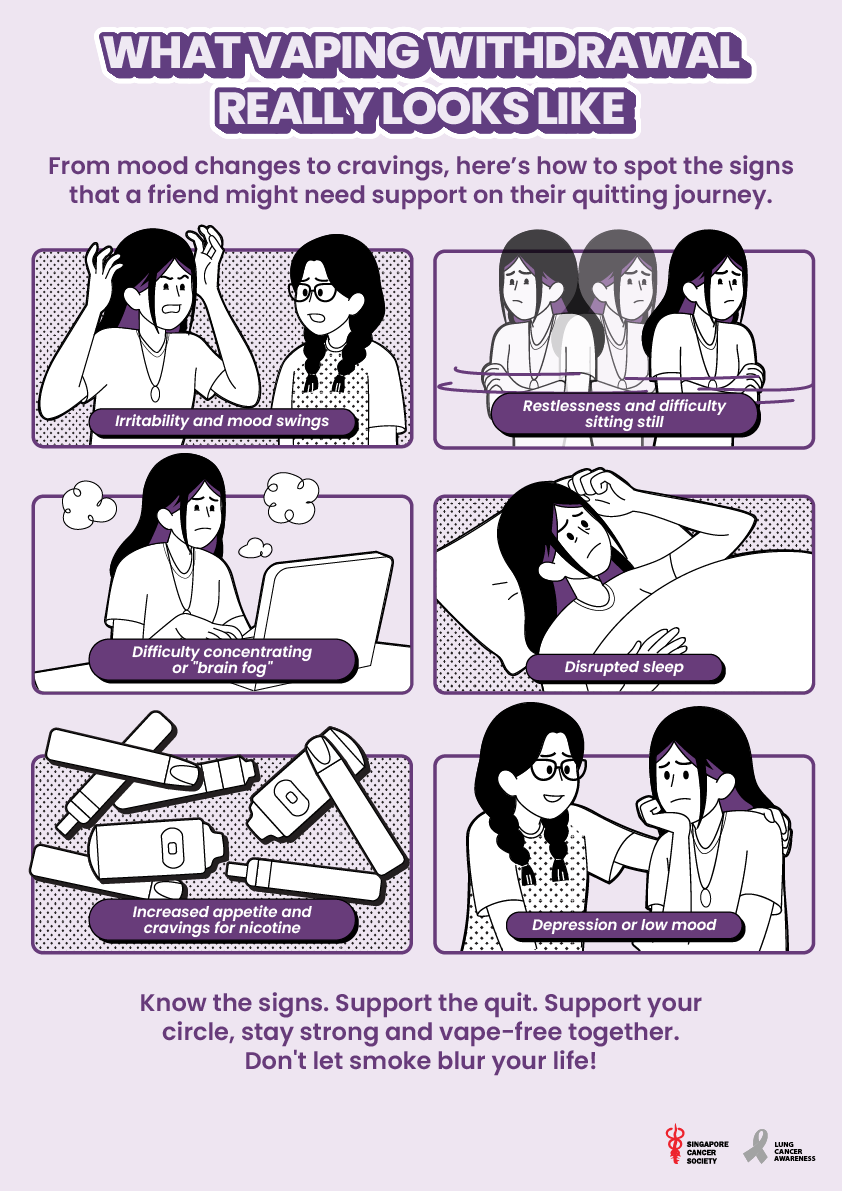
Vaping can seriously harm your body in many ways. It can make asthma worse by irritating your airways, especially if you already have asthma. Harmful chemicals in vape flavours, like diacetyl, can scar your lungs and cause a disease called "popcorn lung," which makes it hard to breathe. Vaping also damages your heart and brain because of nicotine and other toxins, raising your blood pressure and narrowing your arteries. There’s a condition called EVALI (e-cigarette or vaping-associated lung injury) that causes coughing, chest pain, and breathlessness, which can be fatal. Nicotine addiction changes brain chemistry, making it hard to quit, and even "nicotine-free" vape liquids may still have nicotine. Vaping also affects people around you through second-hand vapour. Some vapes have batteries that can explode, and cause burns and injuries. Toxic ingredients in vapes increase the risk of lung cancer and other comorbidities, such as respiratory diseases. Symptoms also include chronic cough, wheezing, and chest tightness.
Social effects of vaping
Vaping causes social problems too, as many youths start vaping to cope with stress but end up isolating themselves and keeping secrets. Addiction changes behaviour, which damages family and social relationships. Vaping can also lead to smoking, as the nicotine in vapes creates dependency and makes users crave stronger hits. Over time, they may turn to cigarettes, which contain even higher levels of nicotine and toxic chemicals. In Singapore, vaping offences bring legal penalties and social stigma, which can affect a young person’s education and social life.
Emotional effects of vaping
Emotionally, vaping is bad for young brains. Nicotine disrupts brain development, worsen impulse control and increases risks of anxiety and depression. Addiction causes psychological stress and feelings of detachment. Mental health challenges from vaping addiction are recognized in Singapore, and support services are available to help youth quit.
Overall, vaping harms your lungs, heart, brain, and social life, while causing emotional problems and addiction. It’s not safe, especially for young people whose brains are still developing. Avoid vaping to keep healthy in body, mind, and relationships.
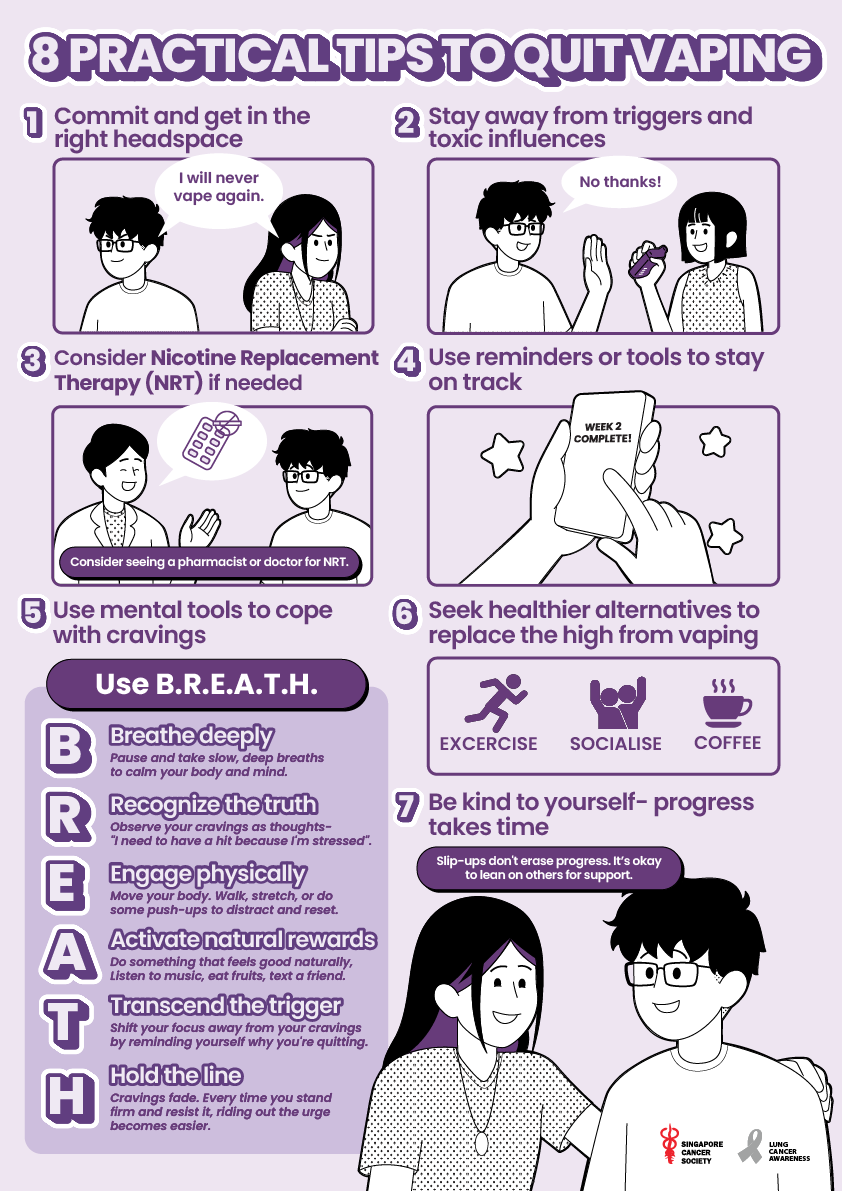
Get Help to Quit
Government support
QuitVape: Government initiative providing guides, tips, and resources to quit vaping. Users can access info online at gov.sg/stopvaping to start their journey.
Tobacco Branch Hotline (6684 2036 / 2037): Callers get advice and guidance from trained staff on quitting smoking or vaping. Support is personalised and confidential.
HPB I Quit Programme: Offers workshops, counselling, and step-by-step quitting plans. Users follow structured support to reduce nicotine use and stay smoke-free.
General Hotlines (1800 223 1313 / QuitLine 1800 438 2000): Connects users to trained counsellors for quitting support. Provides motivation, coping tips, and follow-ups.
Clinical support
National Addictions Management Service (NAMS): Specialised clinic offering medical assessment, counselling, and treatment plans for nicotine addiction. Book via phone or online.
NUS Smoking Cessation Programme: Provides structured counselling and behavioural tools to help students and staff quit smoking or vaping. Focuses on managing cravings and avoiding relapse.
Online tools
Smokefree.gov : Online platform with quit plans, apps, and tips. Users can track progress, get motivational content, and follow personalised schedules.
Helplines
WE CARE: Offers confidential support for youth struggling with vaping or other addictions via phone, WhatsApp, or email. Helps plan practical steps to quit.